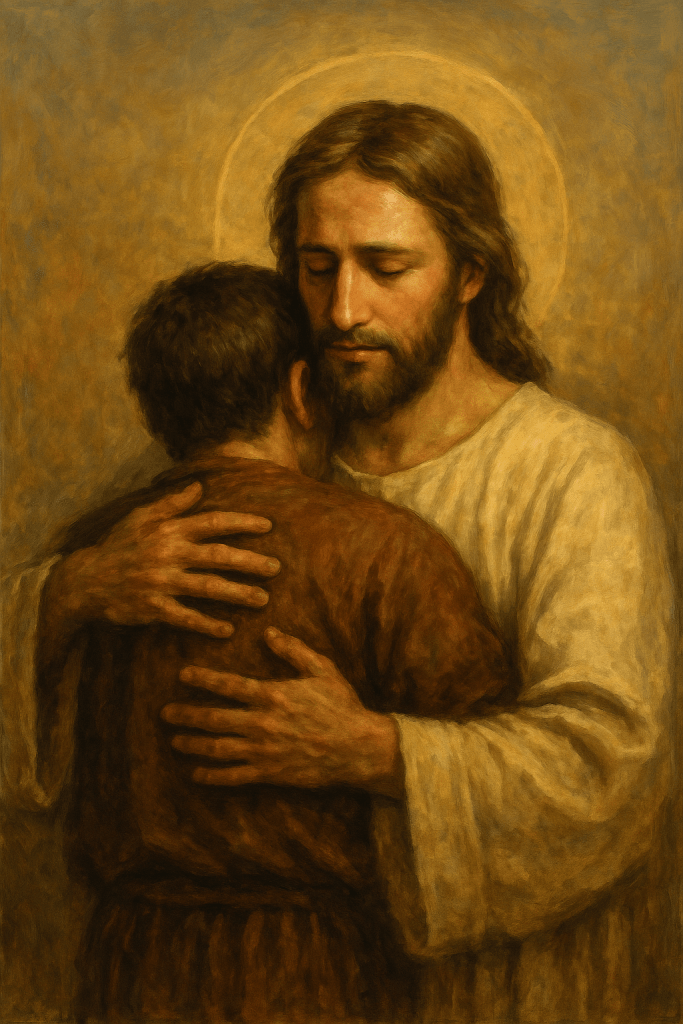
Forgiveness is one of the most challenging commands we are called to obey as followers of Christ. When we’re wronged, our old nature, the flesh, often rises up instinctively. Anger flares, bitterness creeps in, and before we know it, we’re caught in a cycle of hurt and retaliation. Yet Jesus calls us to a radically different way.
In Matthew 18:21–22, Peter asked Jesus, “Lord, how many times shall I forgive my brother or sister who sins against me? Up to seven times?” Jesus replied, “I tell you, not seven times, but seventy-seven times.” Some translations phrase it as “seventy times seven,” which equals 490. This number is not a literal limit but a call to limitless forgiveness. In Hebrew thought, it represents completeness and perfection. Christ was saying to forgive completely, continually, and without keeping count.
But how? How do we forgive those who have hurt us deeply, whether the offense is minor or life-altering?
It begins with love. Not the world’s version of love, but the love of Jesus. 1 Corinthians 13:5 reminds us that love “keeps no record of wrongs.” When we love as Christ loves, we begin to see people the way He does. We stop judging by outward actions and start considering the heart.
Consider this: suppose your manager lashes out at you unfairly. Your instinct might be to snap back or stew in resentment. But what if you knew that earlier that day, your manager had been harshly reprimanded by their own supervisor? Suddenly, their reaction—though still wrong—makes more sense. You understand the stress behind the outburst. This is how Jesus sees us. John 2:25 says that He “knew what was in each person.” He sees past the behavior into the burden.
We’ve all had moments where we’ve snapped at someone because of our own internal struggles. Yet we tend to give ourselves grace in those moments, thinking, “I was just having a bad day.” At the same time, we often assume others lash out because of some flaw in their character. But James 2:13 warns that “judgment without mercy will be shown to anyone who has not been merciful. Mercy triumphs over judgment.”
Forgiveness is powerful. It is healing. It’s a divine act that reflects the heart of God. Proverbs 19:11 says, “It is to one’s glory to overlook an offense.” When we do this, it not only frees the other person—it also frees us.
Scripture is full of beautiful examples of forgiveness:
- Esau forgiving Jacob, the brother who stole his birthright (Genesis 33)
- Joseph, who was betrayed by his brothers, but later embraced and provided for them (Genesis 45)
- Hosea, who loved his unfaithful wife Gomer and took her back as a picture of God’s unfailing love for Israel (Hosea 3)
- Stephen, the first Christian martyr, who while being stoned cried out, “Lord, do not hold this sin against them” (Acts 7:60)
But the ultimate example is Jesus Christ. As He hung on the cross, bloody and mocked, He said, “Father, forgive them, for they know not what they do” (Luke 23:34). That moment echoes through eternity. It is the clearest picture of true forgiveness—unearned, undeserved, and freely given.
Forgiveness can reach deeply into the hearts of those who expect punishment but are met with grace instead. Romans 2:4 reminds us that it is God’s kindness that leads us to repentance.
So when you are called to forgive, remember the One who forgave you first. Ephesians 4:32 commands us, “Be kind and compassionate to one another, forgiving each other, just as in Christ God forgave you.”
If you are struggling to forgive, seek the Lord first. As Jesus said in Matthew 6:33: “Seek first the kingdom of God and His righteousness, and all these things will be added to you.” These things are not just material blessings but spiritual riches: love, joy, peace, patience, kindness, goodness, faithfulness, gentleness, and self-control (Galatians 5:22–23). These fruits of the Spirit never fade because they spring forth from the eternal God who is the same yesterday, today, and tomorrow.
When these are at work in your life, forgiveness becomes not only possible; it becomes a testimony to the transforming power of Christ in you.
 Unchained Servant
Leave a comment